
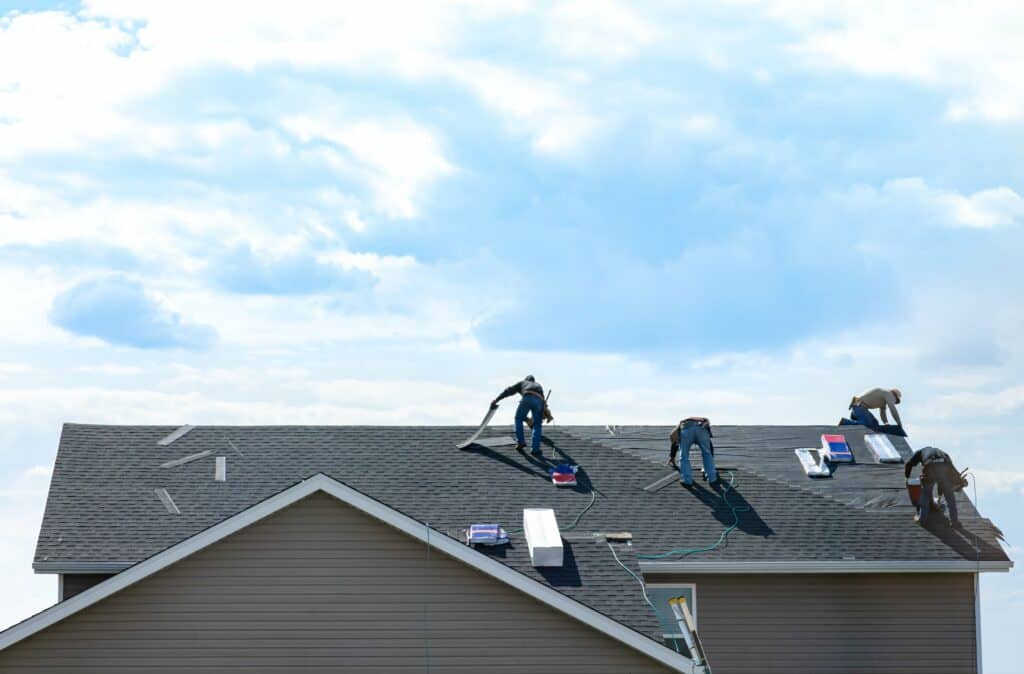
The number of roof tiles needed for a three-bedroom house can vary depending on a lot of different factors, such as the size and shape of the roof, the type of tiles or slats being used, and any other additional features, such as whether your roof includes a chimney or windows. Cost-effective solutions are available for customers seeking value and durability. It is important to check the manufacturer’s specification for each tile, including coverage per square metre, to ensure an accurate calculation and compliance with building regulations and standards.
As a rough estimate, the number of tiles you will require for a three-bedroom house is around 2,000 – 4,000 tiles; however, this number can vary extremely based on the factors we have mentioned. To calculate the number of tiles needed, use the formula: Roof area (m²) x tiles per m². We also recommend adding an extra 10-15% to your total tile count to account for overlaps and wastage.
Throughout this article, we will dive into how you can work out the exact number of roof tiles you will require for your three-bed home, as well as factors to consider when purchasing your new roof tiles, such as checking the manufacturer’s specification for headlap and coverage, so that you can find the perfect ones for your three-bed home.
As a leading roofing contractor in Melksham, we have a wide array of experience in the trade, installing and repairing roofing tiles for three-bedroom homes. For this reason, throughout this guide, we will include expert tips and tricks that we use to help you identify how many tiles you will need for your three-bed home. You can also browse our extensive range of roof tiles and explore the options available to suit your building project.
Looking to replace or repair your roof? Here at A L King Roofing, we are the leading roofing company in Wiltshire and the surrounding areas. Call us on 01225 705918.
Types of Roofing Materials
Planning a successful roofing project begins with a clear understanding of which roof tiles will best serve your property’s needs. It can be helpful to consider the various materials available, as each offers distinct advantages that should align with your specific requirements. Concrete roof tiles represent a practical starting point for many homeowners, particularly where cost-effectiveness and durability are key considerations. These concrete tiles can be valuable for properties that require minimal ongoing maintenance, and they are designed to perform well when exposed to challenging weather conditions. Interlocking concrete tiles, which represent a specific approach within concrete options, are engineered to create secure connections that provide weather-tight protection. This approach helps enhance the roof’s overall resilience and can contribute to improved longevity over time.
For those seeking a more traditional aesthetic, clay roof tiles offer a timeless solution that should be considered where appearance plays a central role. Clay tiles can significantly improve the visual appeal of your property and are valued for their classic character. While clay tiles may require a higher initial investment compared to concrete alternatives, their longevity and distinctive style often make them worthwhile for homeowners who prioritise lasting visual impact. The decision between concrete and clay roof tiles should be guided by your project’s budget constraints, desired appearance, and the level of ongoing maintenance you are prepared to undertake. Both materials can provide reliable performance, but concrete tiles are often favoured where minimal maintenance and cost control are primary concerns, while clay tiles should be chosen when aesthetic appeal and long-term performance take precedence. This thoughtful selection process helps ensure the roof will serve your property well for many years to come.
Need expert advice? Contact us today and get the help you deserve!
How Do I Work Out How Many Roof Tiles I Need For A Three-Bedroom House?
There are three ways you can work out how many roof tiles you need for a three-bedroom house. To calculate the number of roof tiles needed, first determine the area of the roof. Calculating the area of your roof is the first step. From here, you will need to determine the pitch of your roof and the rafter length, as these measures and specifications affect the calculation. Roof pitch is a key factor in selecting roof tile types that suit your project, as different tiles are designed to perform best at specific pitches.
This will allow you to determine the entire tile coverage and the surface area that needs to be covered. The formula to calculate the number of tiles is: Roof area (square metres) x tiles per square metre. This sum will give you the number of tiles required to cover the surface area of your roof, but you must also consider the type of tile, as different types of roof tiles cover different amounts of surface area. The size and specification of roof tiles determine how much coverage each type offers, and larger-format concrete tiles cover more ground per tile than traditional clay tiles. Low-pitch roofs (15°–22.5°) require interlocking concrete or specially designed low-pitch tiles, while high-pitch roofs (35°+) can use plain clay or concrete tiles.
You also need to factor in the required headlap of a tile, as the headlap specification and the pitch of the roof affect the amount of overlap required. Larger overlaps mean more tiles are needed. Complex roof designs may require more tiles due to increased wastage and the need for more cuts, as well as more tiles due to more cuts and overlaps.
Manufacturers typically provide a ’tile coverage’ guide for each product, which accounts for variables like tile size and overlap. Always check the manufacturer’s specification and tile coverage information to ensure accurate calculations. It is recommended to add an extra 10-15% to the total tile count to account for overlaps and wastage. Adding 10% extra tiles is recommended for standard roofs to account for offcuts and damage.
It is important to note the risk of improper installation or maintenance of roof tiles, which can lead to damage, safety hazards, or increased costs. Installation and maintenance must be carried out by competent persons in accordance with British Standards and relevant Building Regulations to ensure compliance and mitigate these risks.
Throughout this article, we will provide you with the formulas and calculations you will need to determine the number of tiles you will require for your roof.
Contact us today for a free, no-obligation quote and start your roofing project with confidence!
How To Calculate Your Roof Area
Calculating the area of the roof is the first step in determining how many roof tiles are needed. First and foremost, to work out the number of tiles you will require for your three-bedroom house, you will need to work out the roof area.
To do this, please follow the formula below:
- Break Down the Roof into Sections: If your roof has a simple shape, such as a single rectangle or square, you can use measures like the length and width of the entire roof. However, if your roof is more complex, with multiple sections or different shapes, break it down into smaller, more manageable sections.
- Measure the Length and Width: For each section of the roof, use a tape measure to record the measures of length and width. Measure from the eaves (the lower edge of the roof) to the ridge (the highest point where the sections meet) for the length, and from one side of the roof to the other for the width. Record these measurements in feet.
- Calculate the Area of Each Section: Once you have the length and width for each section, multiply them together to find the area of each section in square feet. The formula for calculating area is: Area = Length × Width
- Add Up the Areas: If you have multiple sections, add up the areas of each section to find the total roof surface area. This will give you the overall size of your roof in square feet.
As an example, we used a three-bedroom home:
- Measure the Length and Width: Assume the measures of the main roof section are 30 feet in length and 20 feet in width. Additionally, let’s say there’s a smaller section, like a garage, with measures of 20 feet in length and 15 feet in width.
- Calculate the Area of Each Section:
- Main Roof Section: Area = Length × Width = 30 ft × 20 ft = 600 sq ft.
- Garage Roof Section: Area = Length × Width = 20 ft × 15 ft = 300 sq ft.
- Add Up the Areas: Main Roof Area + Garage Roof Area = Total Roof Surface Area 600 sq.ft. + 300 sq.ft. = 900 sq.ft.
How To Work Out The Pitch Of Your Roof
Once you have worked out the area of your roof, you need to account for the pitch of your roof. To do this, please follow these steps:
- Measure the Run: Use a tape measure to determine the horizontal length between the peak of your roof and the wall. This measurement represents the run of your roof.
- Calculate the Rise: Use a tape measure to find the height of your apex above the wall structure. This measurement represents the rise of your roof.
- Calculate the Tangent: Divide the rise by the run to find the tangent of the roof’s slope. This is done by dividing the rise by the run (rise ÷ run = tangent).
- Use Trigonometric Functions: To convert the tangent to degrees, utilise trigonometric functions. The arctangent (inverse tangent) function is commonly used for this purpose. The formula is: Pitch Angle (in degrees) = arctan (rise ÷ run)
- Calculate the Pitch Angle: Input the rise and run values into the arctangent function on a calculator to find the pitch angle in degrees. The resulting value will give you the pitch angle of the roof.
The pitch of the roof affects the amount of overlap required for the tiles, which in turn influences the total number of tiles needed. Roof pitch also determines which types of roof tiles are suitable for your project, as some tiles are specifically designed for low or high pitches. This overlap, along with other specification details such as headlap and coverage per square meter, determines the final tile requirement for your project.
How To Calculate Rafter Length
Finally, you will need to work out the rafter length. To do this, simply follow the guide below:
- Measure the Horizontal Run of the Rafter: The horizontal run is the distance along the bottom edge of the rafter from the wall to the outside edge of the roof. Measure this distance accurately using a tape measure.
- Calculate the Vertical Rise of the Rafter: The vertical rise is the height of the rafter from the top of the wall to the peak of the roof. This can be calculated by multiplying the horizontal run of the rafter by the pitch ratio. For example, if the pitch is 4:12 and the horizontal run is 10 feet, the vertical rise would be (4/12) × 10 feet = 3.33 feet.
- Use the Pythagorean Theorem: Once you have the horizontal run and vertical rise, you can use the Pythagorean theorem to calculate the length of the rafter. The formula is:
Rafter Length = √(Horizontal Run² + Vertical Rise²)
Plug in the values you’ve measured to find the length of the rafter. - Account for Overhang: If your roof has an overhang, you’ll need to add the length of the overhang to the calculated rafter length to ensure the rafter extends past the edge of the roof.
How To Calculate The Amount Of Tiles
From here, you can then use this information to work out the number of tiles you will require by using the following method:
The basic sum to estimate the number of roof tiles needed is: Roof area (in square metres) x tiles per square metre. The number of tiles per square metre depends on the type and size of tile, as different tiles cover different areas when installed. Manufacturers typically provide a ’tile coverage’ guide for each product, which details how many tiles are needed to cover one square metre, factoring in tile size and overlap.
It is also recommended to add an extra 10-15% to your total tile count to account for overlaps and wastage.
Factors To Consider When Ordering Tiles
As one of the leading roofing merchants in Melksham and the surrounding areas, we are no strangers to the pros and cons of each material and type of roofing tile. Roof tiles are a key roof covering, and we offer a wide range of products and stock to suit different needs and preferences. For this reason, we have created a list of factors you should consider when purchasing new roof tiles for your home renovation. It is essential to choose the right type and amount of roof tiles to finish your project on time and within budget.
Now that you have worked out the number of roof tiles you require for your roofing project, you should now think about the following factors:
- Material: There are various roofing tile materials available, each with its own advantages and disadvantages. Common options include clay, concrete, metal, and asphalt. You may also opt for slats and slate roof tiles, which are highly durable, long-lasting, and offer a premium aesthetic. Slats are also an alternative roofing material, often chosen for affordability and traditional appearance.
- Climate: The climate of your region plays a significant role in determining the most suitable roofing tiles. For example, in areas prone to high winds or storms, you may need tiles that are rated for high wind resistance. In regions with extreme temperatures, you might prioritise tiles that offer good insulation properties.
- Style and Aesthetics: Roofing tiles contribute significantly to the overall appearance of your home. Choose tiles that complement the architectural style of your house. You can opt for plain tile options such as Marley Eternit Clay Hawkins tiles (265 x 165mm, requiring 60 tiles per m²) or Redland Rosemary clay roof tiles (265mm x 165mm), which are popular for their traditional look. Other examples include the Redland Rosemary Craftsman Plain Tile and Marley Ashdowne Handcrafted Plain Tile, ideal for those seeking a handcrafted finish.
- Cost: Roofing tiles come in a wide range of prices, so it’s essential to consider your budget when making a selection. Keep in mind that while some materials may have a higher upfront cost, they could save you money in the long run due to their durability and energy efficiency. For transparency, our prices include VAT, so you know exactly what you are paying.
- Installation Requirements: Different roofing materials have varying installation requirements, and some may be more complex or labour-intensive than others. Dry fixing is an easy and secure method to install roof tiles, simplifying the process and ensuring durability without the need for mortar. Some tiles are easier to install than others, and you may opt for larger-format tiles or specific profiles to reduce labour and installation time.
- Longevity and Maintenance: Evaluate the lifespan and maintenance needs of the roofing tiles you’re considering. Some materials require regular upkeep, such as cleaning or sealing, to ensure they remain in top condition. Periodic inspection for damaged, slipped, or missing tiles and debris build-up is important, and maintenance should use methods that do not damage the product. Roof tile clips are used to secure tiles and slats from harsh weather conditions, ensuring they remain in place during heavy winds and storms. Ridge tiles are essential for covering the top join of pitched roofs, protecting against moisture ingress that could damage other parts of the roof. Tile roofing also has heavy thermal mass, helping to regulate indoor temperatures and providing energy efficiency.
With all this in mind, you should now have a clear and concise idea of what is required for your roofing renovation and how you can pick the perfect tile to ensure that it is durable, long-lasting and most importantly, protective of the property from the harsh weather conditions it will face 24 hours a day, 7 days a week.
If you are unsure of the best type of roofing tile for your property in Melksham or the surrounding areas, or would like to request more information or assistance regarding our products and installation methods, please speak to one of our roofing experts on 01225 705 918 or visit our roofing merchants centre in Melksham. Our trade professionals are always available to provide expert advice and guidance.
Interlocking and Clay Roof Options
Choosing the right roof tiles for your home begins with understanding what works best for your particular situation. Different roof tile types and profiles are available to suit various architectural styles and functional needs, helping you achieve the desired look and performance. Most homeowners want something that looks good and performs well over time. If you think of your roof as the protective shell of your home, it becomes easier to see why the choice matters. Interlocking concrete tiles can be helpful for those who prefer a practical approach. These tiles fit together in a way that makes installation more straightforward and creates a secure finish that handles weather well. It can be valuable to consider that concrete tiles need little ongoing attention, which appeals to many people who want to avoid regular maintenance tasks.
Clay roof tiles offer a different approach, with a classic appearance that many find attractive. Clay tiles are a popular choice for traditional properties due to their distinctive profile and long-lasting appeal. They come in various colours and styles, which makes them suitable for different types of homes. Clay tiles tend to keep their appearance over the years, which explains why they remain popular for traditional properties. When working out how many tiles you might need, it helps to think about the total roof area first. The type and size of tile matter too. Think of this calculation as mapping out your roof’s requirements. A concrete tile often covers more surface than a clay tile, which means you may need fewer of them to complete the work. Taking time with these details helps ensure your calculation feels right and keeps costs manageable.
By focusing on what type of tile suits your needs and taking care with the measurements, your roofing project becomes more likely to go smoothly. This approach helps create a roof that both protects well and looks as you intended. Over time, this careful planning can lead to better value from your investment and a result that feels right for your home.
Get in touch now for expert, tailored roofing advice you can trust!
Conclusion
As mentioned throughout this article, although the rough answer to how many roof tiles you will need for a three-bedroom home is 2,000 – 4,000 tiles, you must do all the calculations to ensure you get the exact amount.
By working out the roof area, the pitch of your roof and the rafter length, you can work out the exact amount of tiles you will require for your roof. From here, you will need to ensure that you account for an overlap for each tile of around 10 – 15% for each tile. In addition to this, you will also need to consider wastage due to cutting tiles to fit around edges, valleys and other roof features. Depending on the complexity of your roof design, you may need to add an extra 5-10% to your tile count.
These factors are important to consider, as well as working out the total amount, in order to ensure you purchase the correct amount of tiles for your roof.
If you live in the Melksham, Bath or Bristol area, here at A L King Roofing, we provide a reliable, affordable and high-quality roof repair service. Originally starting out in 1979, A L King Roofing has over 40 years of experience in the roofing industry, from repairs to new roof installations.
Furthermore, we even provide a selection of high-quality roofing materials such as different roofing shingles and replacement shingles, which you can find in our roofing merchants’ centre in Melksham.
Speak to a member of the team on 01225 705 918 and discuss all your roofing requirements.
FAQs
What are the benefits of premium roof tiles?
Premium roof tiles, such as natural slate and high-quality clay tiles, offer exceptional durability, lasting up to 100 years or more. They are extremely durable, weather-resistant, and provide a timeless aesthetic that enhances your property’s value. Investing in premium roof tiles can reduce long-term maintenance costs and improve energy efficiency due to their heavy thermal mass.
How do I choose between concrete and clay roof tiles?
Concrete roof tiles are generally more cost-effective and extremely durable, making them ideal for homeowners on a budget seeking longevity with minimal maintenance. Clay roof tiles, available in various colours including classic grey and black, provide a premium look with excellent weatherproofing and UV resistance. Your choice should consider budget, desired appearance, and roof pitch.
Can roof tiles withstand harsh weather conditions?
Yes, roof tiles are designed to be extremely durable and resistant to fire, rot, and insects. They perform well even in coastal or hurricane-prone areas. Roof tile clips and ridge tiles help secure tiles during heavy winds and storms, ensuring your roof remains intact and moisture-free.
How many roof tiles do I need for a three-bedroom house?
Typically, a three-bedroom house requires between 2,000 and 4,000 roof tiles, depending on roof size, pitch, and tile type. It’s important to calculate your roof area and add an extra 10-15% to account for overlaps and wastage. Consulting manufacturer specifications ensures accurate coverage and compliance with building regulations.
What colours and styles of roof tiles are available?
Roof tiles come in a variety of colours such as grey, black, red, and brown, allowing you to match your home’s style. Options include interlocking concrete tiles, traditional clay tiles, natural slate, and synthetic alternatives that mimic premium materials. This wide selection ensures you can achieve both aesthetic appeal and functional performance.

